A Revolutionary Run
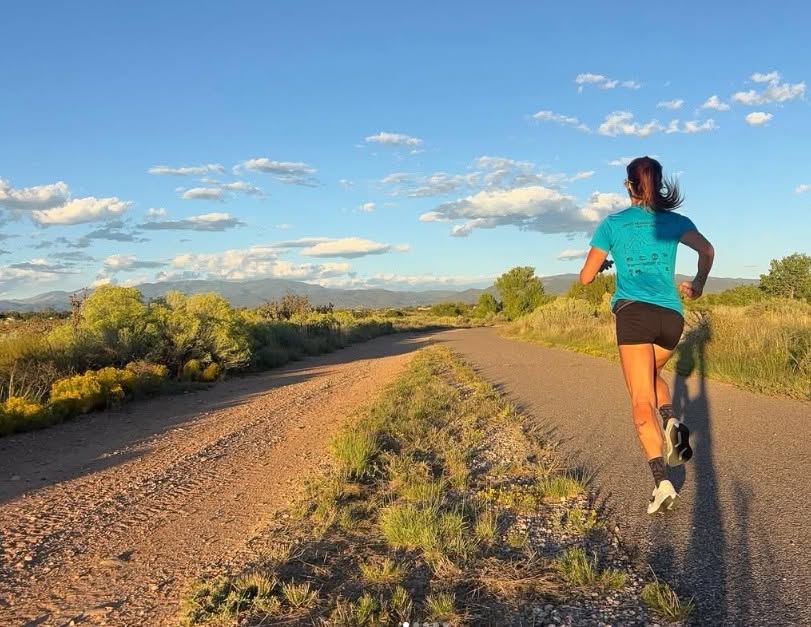
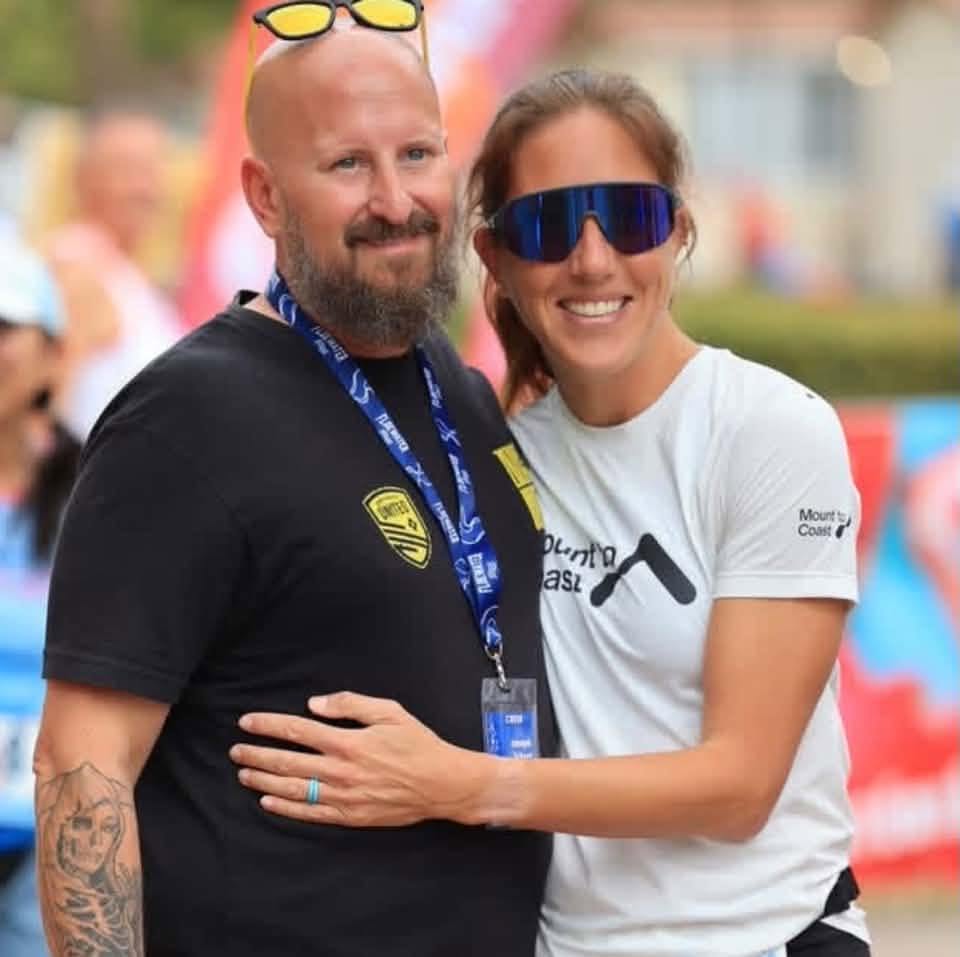
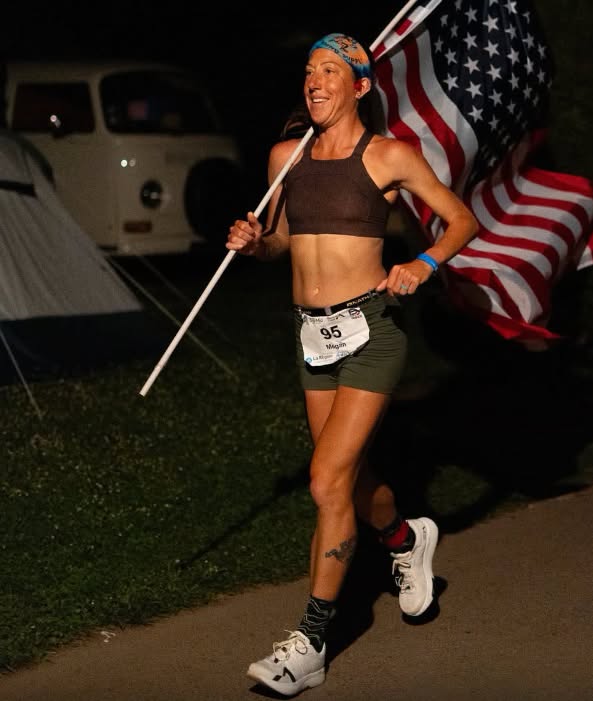
On September 9th, 2026, Meg Eckert-resident of right here in Santa Fe, New Mexico put the finishing touches on bettering her own 6-Day Ultramarathon World Record, covering an astonishing 636.482 miles or 1,024.319 kilometers in 144 hours.
Rightfully so, she has been receiving a multitude of congratulations and much fanfare since then. As we continue to unpack the statistics, we’d like to invite running fans everywhere to examine just how special Meg’s run truly was. While a world record in anything is inherently remarkable-you’ve done something better than literally anyone in the history of humanity ever has-in our opinion the significance of Meg’s recent run extends far BEYOND a world record, and it honestly has little equal across the entire realm of sports. It might even be described as “revolutionary” ...
Consider this: In the ultramarathon world, many would consider the legendary Greek athlete Yiannis Kouros to be the GOAT-the greatest of all time. Indeed, the scale, breath, and duration of his sheer domination of the sport has never been equaled before or since his long and illustrious career. He once held every major ultra distance world record from 100 miles to 1,000 miles, and is credited with setting over 160 world records in total. Many of these stood for decades, and while most of his major records such as the 24-hour run have been surpassed in recent years, he still holds the 1,000 mile record, among others.
Kouros set the 6-Day world record a total of 4 times beginning in 1984. In the spring of ‘84 he ran 635.5 miles, and followed that up in the fall of that same year by breaking his own record by the slimmest of margins at 6:35.7. He improved this to 639.3 in 1988, before losing the record to Jean-Giles Bosequette of France for 13 years at 642.6 miles. Finally, in 2005 at the age of 49, Kouros reclaimed his record at 644.2 miles, which stood as the world record until just 2 years ago in 2024, when it was broken by Matthew Boone of Belgium at 650.1. In this chronology, Kouros broke the 6-Day record 21 years after he first set it-which may in and of itself be a world record across all of distance running for the longest span between breaking a world record in the same event, and is a further testament to his greatness. Kouros’s final mark of 644 remains the third best performance of all time.
Meg’s historic run this month bettered the first of Yiannis’s two world records by nearly a mile, and was just 3 and 8 miles, respectively, behind his third and fourth records. Again, this is a man widely considered the greatest ultrarunner ever, and who still holds ACTIVE world records in other events.
To put it simply, this would be akin to Caitlin Clark putting up Michael Jordan-like numbers… WHILE PLAYING AGAINST MEN IN THE NBA!!!
On another note, if you’re smiling and nodding along thinking that the “6-Day Race” is some obscure sideshow that’s only been run a handful of times in history, think again!! Allow us to dive into some true “running nerd” territory… In fact, the race has a long and storied history, perhaps more so than any other ultramarathon distance. It predates even modern marathon races. Believe it or not, the 6-Day race has its roots clear back in the 18th century. In the 1760's, Englishman Foster Powell completed a series of highly publicized wagers to cover the some 400 miles between York and London in 6 days. The idea was a week or less-but in those days competing athletically on the Sabbath. Hence, the concept of the 6-Day event was born.
Fast forward an entire century, and the 6-Day race was for brief time the most popular spectator sport in the United States. In the 1870's and 80's, crowds of up to 70,000 would fill stadiums to watch “pedestrians” run these multi-day races and wager large amounts of money on the winners. One P.T. Barum himself-the great American showman-staged 6-Day races as the centerpiece of grand exhibitions in New York City. The first women’s 6-Day race was held in 1876-twenty years before the first modern marathon. In a time when Buffalo Bill Cody and Annie Oakley were thrilling crowds, these 19th century ultramarathoners were doing the same.
To learn more about the history of the 6-Day race, follow the link to read a fabulous series by Ultrarunning History, from which many of the statistics in this article are drawn.
Final food for thought… Kouros improved a world record from 1888 by a total of 21 miles across 4 records and 21 years. Meg has improved the women’s record from 2024 by a whopping 69 miles across 2 records. This is a 12% improvement over where the record stood just 2 years ago! This includes a 33 mile-or 5%-improvement over her own first world record set just last year. She needs just 14.5 more miles-or another 2% improvement-to better the current men’s world record.
In the entire history of foot racing-indeed in the entire history of humanity-dating back to the first ancient Olympic Games in 776 BC and beyond, we are not aware of ANY women’s distance running world record in a commonly recorded event that is superior to the men’s…
Meg, we’ll let you recover from this run first, but if running is a sport for dreamers, know that we BELIEVE!!!